

In today’s data-driven world, the demand for skilled professionals is growing rapidly, and enrolling in a Data Analytics Course has become one of the smartest career decisions in India. Whether you are a student, a working professional, or someone planning a career switch, choosing the right course can make a huge difference in your future.
But with so many options available—online, offline, short-term, long-term—it’s easy to feel confused.
This complete guide will help you understand exactly how to choose the best Data Analytics Course in India, so you can invest your time and money wisely.
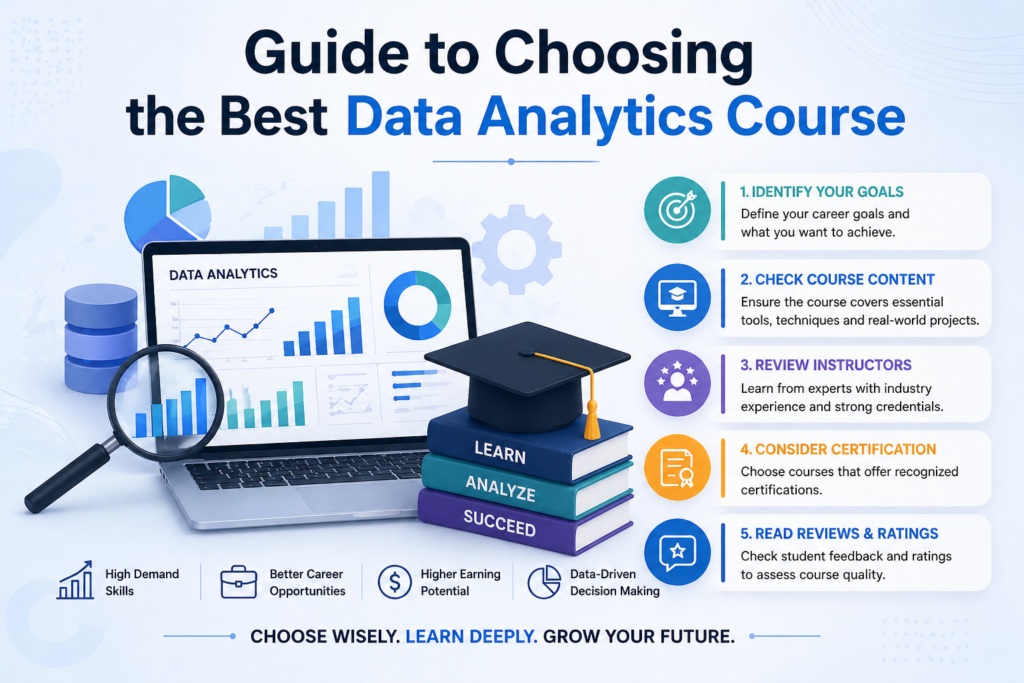
Why Choosing the Right Data Analytics Course Matters?
Not all courses are created equal. Some focus only on theory, while others provide practical training and job support.
The right Data Analytics Course will:
- Build job-ready skills
- Provide hands-on project experience
- Help you create a strong portfolio
- Increase your chances of placement
On the other hand, choosing the wrong course can lead to wasted time, money, and frustration.
1. Define Your Career Goal First
Before selecting a Data Analytics Course, you need clarity on your goal.
Ask yourself:
- Do I want a job as a Data Analyst?
- Do I want to switch careers?
- Am I learning for freelancing or business use?
If your goal is getting a job, you need a course with:
- Placement support
- Industry projects
- Interview preparation
If your goal is learning skills, you can focus more on flexibility and cost.
2. Check Course Curriculum Carefully
The curriculum is the backbone of any Data Analytics Course. A good course should cover all essential tools and concepts.
Must-have topics:
- Excel (data cleaning & analysis)
- SQL (database management)
- Python (data analysis basics)
- Data Visualization (Power BI or Tableau)
- Statistics fundamentals
Bonus topics (very valuable):
- Real-world case studies
- Machine learning basics
- Business analytics
Avoid courses that:
- Focus only on theory
- Skip important tools like SQL or visualization
3. Look for Practical Training & Projects
Theory alone won’t get you a job. Employers want candidates who can apply skills in real scenarios.
A good Data Analytics Course should include:
- Live projects
- Case studies
- Assignments based on real datasets
- Portfolio-building guidance
Example projects:
- Sales dashboard analysis
- Customer behavior insights
- Financial data reports
These projects help you stand out during interviews.
4. Check Placement Support & Career Assistance
If your goal is employment, this is one of the most important factors.
A reliable Data Analytics Course should offer:
- Resume building support
- Mock interviews
- Job referrals
- Placement assistance
Ask these questions:
- What is the placement rate?
- Which companies hire students?
- Do they provide interview preparation?
Be cautious of institutes that promise “100% guaranteed jobs” without proof.
5. Compare Course Fees vs Value
Price should not be the only deciding factor.
Instead of choosing the cheapest option, focus on value for money.
Consider:
- Duration of course
- Depth of curriculum
- Quality of trainers
- Placement support
A slightly expensive Data Analytics Course with strong placement support is often a better investment than a cheap course with no outcomes.
6. Course Duration & Flexibility
Different learners have different needs.
Typical durations:
- Short-term: 2–3 months
- Medium-term: 4–6 months
- Advanced programs: 6–12 months
Choose based on your availability:
- Students → flexible schedules
- Working professionals → weekend or online batches
A good Data Analytics Course should balance depth + flexibility.
7. Trainer Experience Matters
Your learning experience depends heavily on the instructor.
Check if trainers:
- Have real industry experience
- Have worked on live data projects
- Can explain concepts practically
Avoid courses taught by:
- Only academic trainers with no industry exposure
Experienced trainers can provide insights that go beyond textbooks.
8. Online vs Offline Data Analytics Course
Both formats have advantages.
Online Courses:
- Flexible timing
- Learn from anywhere
- Often more affordable
Offline Courses:
- Face-to-face interaction
- Better discipline
- Networking opportunities
Choose based on your learning style.
Many institutes now offer hybrid Data Analytics Courses, combining both formats.
9. Check Reviews & Student Feedback
Before enrolling in any Data Analytics Course, research thoroughly.
Look for:
- Google reviews
- Testimonials
- LinkedIn profiles of past students
Red flags:
- Fake or overly generic reviews
- No student success stories
Genuine feedback helps you understand the real value of the course.
10. Certification & Industry Recognition
A certification adds credibility to your resume.
A good Data Analytics Course should provide:
- Recognized certification
- Industry-relevant training
While certificates are helpful, skills + projects matter more during hiring.
11. Portfolio Building is a Must
Your portfolio is your proof of skills.
Ensure the Data Analytics Course helps you:
- Build real projects
- Create dashboards
- Showcase work on platforms
A strong portfolio can help you:
- Crack interviews
- Get freelance clients
- Stand out from other candidates
12. Look for Industry-Relevant Tools
The best Data Analytics Course focuses on tools used by companies.
Essential tools:
- Excel
- SQL
- Python
- Power BI / Tableau
Courses that teach outdated tools or ignore modern platforms should be avoided.
Common Mistakes to Avoid
Many students make these mistakes while choosing a Data Analytics Course:
- Choosing based only on low fees
- Ignoring practical training
- Not checking placement support
- Falling for marketing promises
- Not reviewing course curriculum
Avoiding these mistakes can save you time and money.
Pro Tips for Choosing the Best Course
Here are some expert tips:
- Always attend a demo class before enrolling
- Talk to past students if possible
- Compare at least 2–3 courses
- Focus on skills, not just certificates
- Choose a course aligned with your career goal
Future Scope of Data Analytics in India
The demand for data analysts is increasing rapidly across industries:
- IT & Software
- Finance
- Healthcare
- E-commerce
- Marketing
Companies rely heavily on data to make decisions, which makes a Data Analytics Course a future-proof investment.
Final Thoughts
Choosing the best Data Analytics Course in India is not just about picking a popular institute—it’s about finding the right fit for your goals, learning style, and career ambitions.
Focus on:
- Practical learning
- Industry-relevant tools
- Placement support
- Real-world projects
If you choose wisely, a good Data Analytics Course can open doors to high-paying jobs, freelancing opportunities, and long-term career growth.