

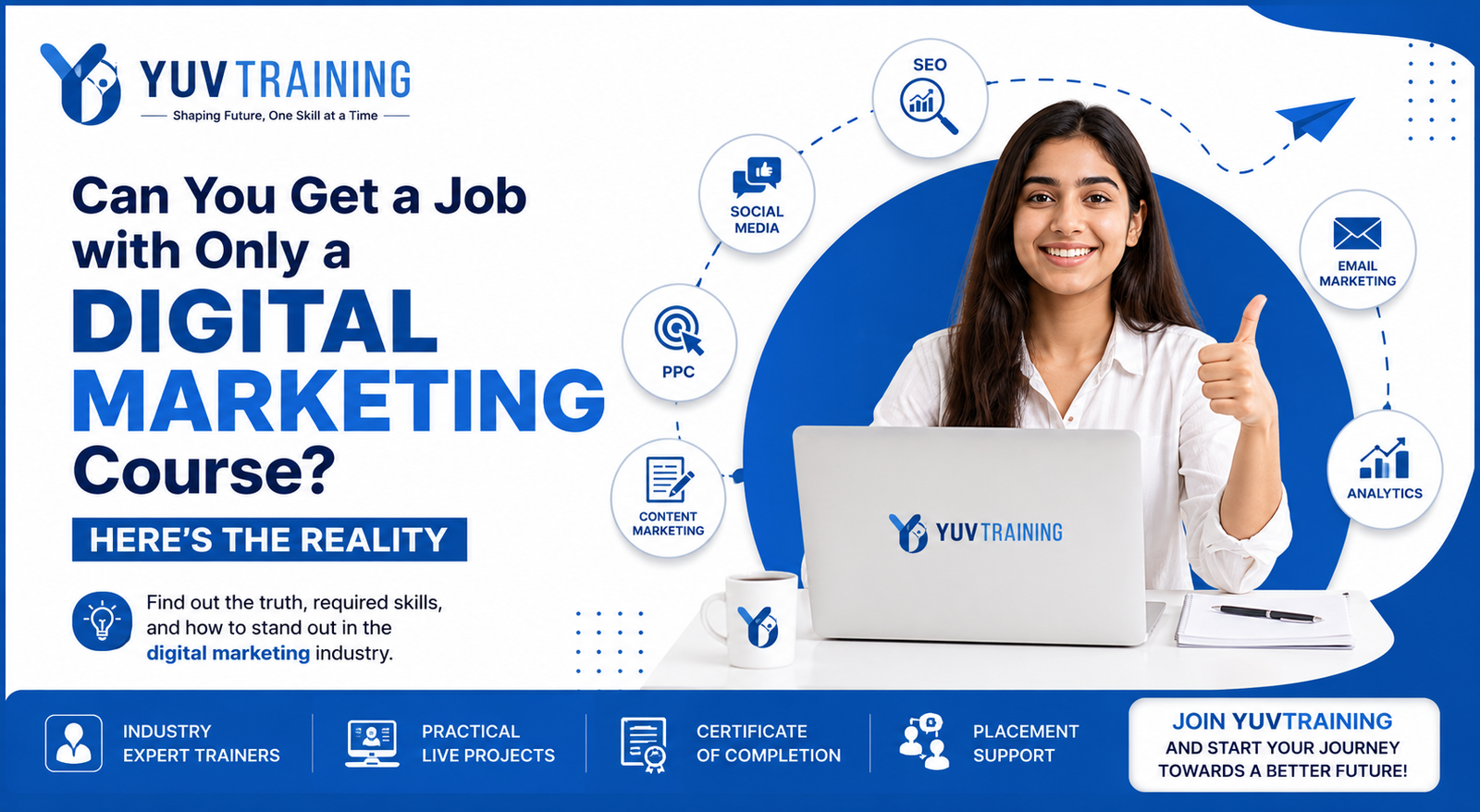
Digital marketing has become one of the fastest-growing career options in recent years. As more businesses shift online, the demand for skilled digital marketers continues to rise. This has encouraged many students, fresh graduates, and working professionals to enroll in a Digital Marketing Course with the hope of landing a good job.
But one question still comes up again and again: Can you really get a job with only a Digital Marketing Course?
The honest answer is yes, but there’s more to it than simply completing a course. A course gives you the knowledge and practical skills, but getting hired also depends on how well you apply what you’ve learned.
Let’s understand the reality behind starting a career in digital marketing.
What Does a Digital Marketing Course Teach?
A good Digital Marketing Course is designed to help beginners understand how businesses promote their products and services online. Instead of focusing only on theory, quality courses include practical training and real-world projects.
Most digital marketing programs cover topics such as:
- Search Engine Optimization (SEO)
- Social Media Marketing (SMM)
- Google Ads (PPC)
- Content Marketing
- Email Marketing
- Google Analytics
- Meta Ads
- YouTube Marketing
- AI Tools for Marketing
These skills are highly valuable because almost every business today needs an online presence.
Is a Course Alone Enough?
Completing a Digital Marketing Course is a great first step, but it is not a guarantee of a job.
Recruiters are looking for candidates who can actually perform digital marketing tasks. They want to know whether you can improve website traffic, run successful ad campaigns, write engaging content, or analyze marketing performance.
This is why practical experience matters just as much as classroom learning.
If your course includes live projects, internships, or portfolio-building activities, you will have a much stronger chance during interviews.
What Employers Actually Look For
Many beginners think companies only check certificates. In reality, employers are more interested in your skills than the number of certificates you have collected.
When hiring entry-level digital marketers, companies usually evaluate:
- Practical knowledge of SEO
- Understanding of Google Ads and Meta Ads
- Content writing ability
- Social media management
- Google Analytics basics
- Communication skills
- Problem-solving approach
- Portfolio or project experience
Even if you have completed only one Digital Marketing Course, these practical skills can help you stand out from other applicants.
Can Freshers Get a Job?
Yes, absolutely.
Many companies actively hire freshers because they are eager to learn and adapt to new technologies.
Common entry-level roles include:
- Digital Marketing Executive
- SEO Executive
- Social Media Executive
- PPC Executive
- Content Marketing Executive
- Email Marketing Executive
- Marketing Coordinator
These positions help beginners gain real industry experience while improving their skills.
Why Practical Experience Matters
Imagine two candidates applying for the same job.
The first candidate has completed a course but has never worked on a website or marketing campaign.
The second candidate has also completed a Digital Marketing Course, but they have optimized a blog for SEO, created social media campaigns, run sample Google Ads, and built a simple portfolio.
Which candidate do you think the employer will choose?
Most companies prefer someone who can demonstrate practical knowledge rather than just theoretical understanding.
This is why practicing regularly after completing your course is extremely important.
Build a Portfolio Alongside Your Course
One of the easiest ways to improve your chances of getting hired is by creating a small portfolio.
Your portfolio can include:
- SEO-optimized blog articles
- Keyword research samples
- Website audit reports
- Social media content calendars
- Google Ads campaign examples
- Meta Ads creatives
- Analytics reports
- Personal website or blog
A portfolio shows employers that you are ready to work on real business projects.
Can You Work as a Freelancer?
Yes.
Many people begin freelancing immediately after completing a Digital Marketing Course.
Small businesses often need help with SEO, social media management, content writing, and online advertising. As you gain experience, you can work with multiple clients and even build your own digital marketing agency.
Freelancing also allows you to earn while continuously improving your skills.
Keep Learning After the Course
Digital marketing changes quickly.
Google updates its search algorithms, social media platforms introduce new features, and AI tools continue to reshape marketing strategies.
The best digital marketers never stop learning.
Follow industry blogs, watch webinars, experiment with new tools, and stay updated with the latest trends. Continuous learning helps you remain competitive in the job market.
Final Thoughts
So, can you get a job with only a Digital Marketing Course?
Yes, you can—but your success depends on what you do after completing the course.
A good course gives you the right foundation, but employers want practical skills, real projects, and the confidence to solve business problems. Focus on building a portfolio, practicing regularly, and staying updated with industry trends.
If you treat your Digital Marketing Course as the beginning of your learning journey rather than the finish line, you’ll be well-prepared for exciting career opportunities in digital marketing.
Remember, companies don’t just hire people with certificates—they hire people who can deliver results. With the right mindset, consistent practice, and a willingness to learn, you can build a rewarding career in one of the fastest-growing industries today.
To get more information visit our campus:YuvTrainings | Skill Development Training Institute