

The world of 3D animation is rapidly growing, offering exciting career opportunities across industries like film, gaming, advertising, architecture, and digital media. With the increasing demand for visually engaging content, skilled 3D animators are more valuable than ever. Enrolling in a professional 3D Animation Course can help you gain the right skills and industry knowledge to succeed in this field. If you’re passionate about creativity, storytelling, and technology, building a career in 3D animation can be both rewarding and future-proof.
In this comprehensive guide, we’ll walk you through a beginner-friendly roadmap to help you start and grow your career in 3D animation, including skills, tools, learning paths, and career opportunities.
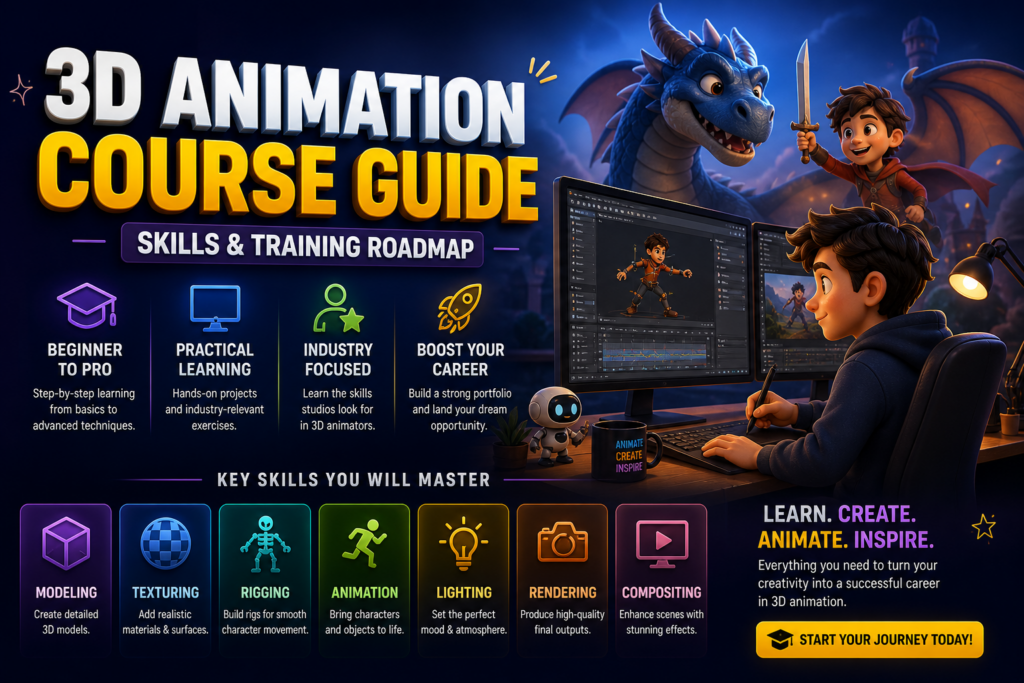
What is 3D Animation?
3D animation is the process of creating moving images in a three-dimensional digital environment. Artists use specialized software to model objects, apply textures, rig characters, and animate them to create lifelike motion. Unlike traditional 2D animation, 3D animation provides depth, realism, and flexibility, making it widely used in movies, video games, simulations, and advertisements.
Why Choose a Career in 3D Animation?
Choosing a career in 3D animation comes with several advantages:
- High Demand: Industries like gaming, film production, and digital marketing are constantly hiring skilled animators.
- Creative Freedom: You get to bring ideas and stories to life visually.
- Diverse Opportunities: From character animation to product visualization, the field offers multiple specializations.
- Global Career Scope: You can work remotely or collaborate with international clients.
- Freelancing Options: Many animators work independently and earn through freelance projects.
Step 1: Understand the Basics
Before diving into tools and techniques, it’s essential to understand the core concepts of animation:
- Principles of animation (timing, spacing, squash & stretch, etc.)
- Basic drawing and design fundamentals
- Understanding motion and physics
- Storytelling and visual communication
Building a strong foundation will make it easier to learn advanced concepts later.
Step 2: Enroll in a 3D Animation Course
One of the most effective ways to start your journey is by enrolling in a professional 3D Animation Course. A structured course helps you learn step-by-step, from basics to advanced techniques, under expert guidance.
A good course typically includes:
- 3D modeling and texturing
- Lighting and rendering
- Rigging and character animation
- Visual effects (VFX) basics
- Portfolio development
Choosing the right 3D Animation Training program ensures you gain industry-relevant skills and practical experience.
Step 3: Learn Industry-Standard Software
To become a professional animator, you must be familiar with popular tools used in the industry. Some of the most widely used software include:
- Autodesk Maya
- Blender
- 3ds Max
- Cinema 4D
- ZBrush (for sculpting)
Start with beginner-friendly tools like Blender (which is free), and gradually move to advanced software depending on your career goals.
Step 4: Choose Your Specialization
3D animation is a broad field, so it’s important to identify your area of interest. Some popular specializations include:
- Character Animation: Bringing characters to life with emotions and movement
- 3D Modeling: Creating objects, environments, and assets
- Texturing & Lighting: Enhancing realism and visual appeal
- VFX (Visual Effects): Creating explosions, simulations, and effects
- Game Animation: Designing animations for video games
- Architectural Visualization: Creating 3D models of buildings and interiors
Focusing on a specialization helps you stand out in the job market.
Step 5: Practice Consistently
Like any creative skill, animation requires regular practice. Start with small projects such as:
- Animating simple objects (bouncing ball, pendulum)
- Creating short character animations
- Designing basic 3D models
Consistency is key. The more you practice, the better your skills will become.
Step 6: Build a Strong Portfolio
Your portfolio is your biggest asset as a 3D animator. It showcases your skills and creativity to potential employers or clients.
Tips for building a strong portfolio:
- Include your best work (quality over quantity)
- Showcase a variety of skills (modeling, animation, lighting)
- Keep it updated regularly
- Add a demo reel (short video compilation of your work)
A well-crafted portfolio can significantly increase your chances of landing a job.
Step 7: Gain Practical Experience
Practical experience is crucial in the animation industry. You can gain experience through:
- Internships at animation studios
- Freelance projects
- Collaborations with other creators
- Personal projects
Real-world experience helps you understand workflows, deadlines, and client expectations.
Step 8: Stay Updated with Industry Trends
The animation industry evolves rapidly with new tools and technologies. Staying updated will keep you competitive.
Follow:
- Industry blogs and tutorials
- Online communities and forums
- YouTube channels for animation learning
- Latest trends like AI in animation and real-time rendering
Continuous learning is essential for long-term success.
Step 9: Explore Career Opportunities
After completing your 3D Animation Training, you can explore various career paths:
- 3D Animator
- Character Animator
- Modeling Artist
- VFX Artist
- Game Designer
- Motion Graphics Artist
- Freelance Animator
Industries hiring 3D animators include:
- Film and television
- Gaming
- Advertising
- E-learning
- Architecture and real estate
Step 10: Start Freelancing or Apply for Jobs
Once you have the skills and portfolio, you can:
- Apply for jobs in animation studios
- Work as a freelancer on platforms like Fiverr or Upwork
- Build your personal brand online (LinkedIn, Instagram, YouTube)
Freelancing allows flexibility, while full-time jobs provide stability—choose what suits your goals.
Skills Required to Succeed
To build a successful career in 3D animation, you need a mix of technical and soft skills:
Technical Skills:
- Knowledge of animation software
- Understanding of modeling and rendering
- Lighting and texturing techniques
- Basic coding (optional but helpful)
Soft Skills:
- Creativity and imagination
- Attention to detail
- Problem-solving ability
- Communication skills
- Time management
Challenges in 3D Animation Career
While rewarding, the field also comes with challenges:
- Steep learning curve for beginners
- High competition
- Continuous need to upgrade skills
- Tight deadlines in professional environments
However, with dedication and the right 3D Animation Course, these challenges can be overcome.
Future Scope of 3D Animation
The future of 3D animation looks extremely promising. With advancements in:
- Virtual Reality (VR)
- Augmented Reality (AR)
- Artificial Intelligence (AI)
- Metaverse development
The demand for skilled animators is expected to grow even further. Investing in proper 3D Animation Training today can open doors to high-paying and creative career opportunities tomorrow.
Final Thoughts
Building a career in 3D animation requires patience, creativity, and continuous learning. By following this roadmap—starting with the basics, enrolling in a quality 3D Animation Course, practicing regularly, and building a strong portfolio—you can successfully enter this exciting field.
Remember, every expert was once a beginner. Stay consistent, keep experimenting, and never stop learning. With the right mindset and training, you can turn your passion for animation into a successful and fulfilling career.